العربية
 English
 français
 Deutsch
 italiano
 русский
 español
 português
 Nederlands
 한국의
한국의 Romania
 Bulgaria
 Melayu

يُعدّ الهيدروجين، كمصدر طاقة نظيف ومتجدد وخالٍ من التلوث، وبفضل كثافته الطاقية العالية، اتجاهًا تنمويًا أساسيًا في عملية التحول الطاقي. ويُعتبر إنتاج الهيدروجين عن طريق التحليل الكهربائي للماء التقنية السائدة لإنتاج الهيدروجين الأخضر، وتدور المنافسة التكنولوجية بين محللات كهربائية ذات غشاء تبادل البروتونات (PEM) و المحللات الكهربائية القلوية لطالما كانت تقنية (ALK) محور نقاشات الصناعة. سنجري نقاشًا مفصلًا ومقارنة للخصائص الأساسية لهاتين التقنيتين.
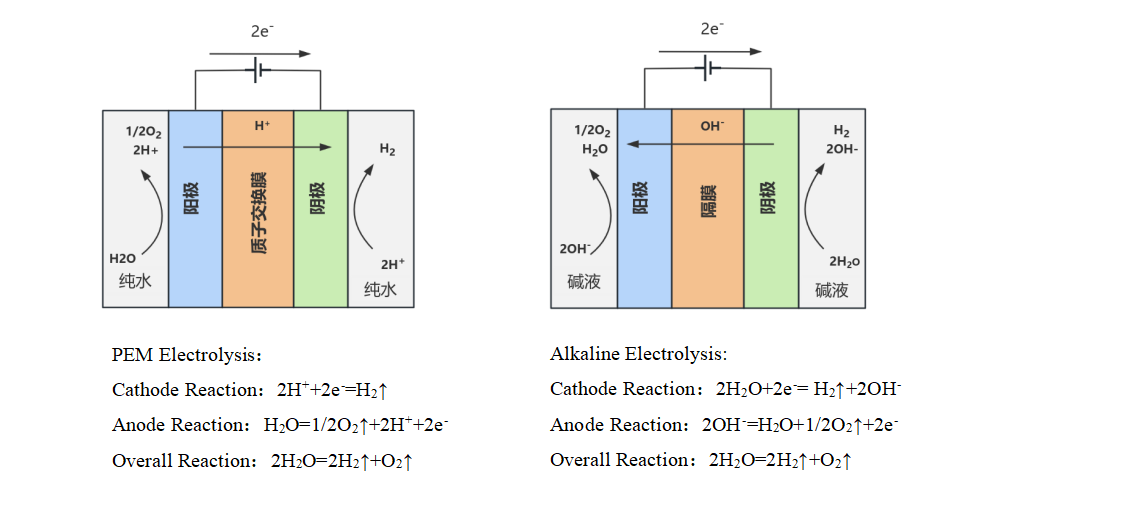
محلل كهربائي ذو غشاء تبادل البروتونات (PEM): يستخدم الماء النقي كمحلول إلكتروليتي، ويعتمد على غشاء تبادل البروتونات لنقل أيونات الهيدروجين (H+) وعزل الغازات. عند المصعد، يُستخدم الماء كمتفاعل في تفاعل الأكسدة (OER)، مُنتجًا الأكسجين (O2) وأيونات الهيدروجين؛ وتحت تأثير مجال كهربائي، تنتقل أيونات الهيدروجين عبر غشاء تبادل البروتونات إلى المهبط، حيث تخضع لتفاعل الاختزال (HER) لإنتاج غاز الهيدروجين.
الخلية الإلكتروليتية القلوية: باستخدام محلول قلوي من هيدروكسيد البوتاسيوم (KOH) بتركيز 30% كإلكتروليت، تنتقل أيونات الهيدروكسيد (OH⁻) عبر غشاء. تكتسب جزيئات الماء على جانب المهبط إلكترونات وتخضع لتفاعل اختزال، مُنتجةً غاز الهيدروجين (H₂) وأيونات الهيدروكسيد. تحت تأثير المجال الكهربائي، تهاجر أيونات الهيدروكسيد إلى المصعد وتخضع لتفاعل أكسدة، مُنتجةً في النهاية الأكسجين وجزيئات الماء. يوضح الرسم البياني أدناه آلية التفاعل بالتفصيل.
 جدول مقارنة تقنيات إنتاج الهيدروجين عن طريق التحليل الكهربائي للماء
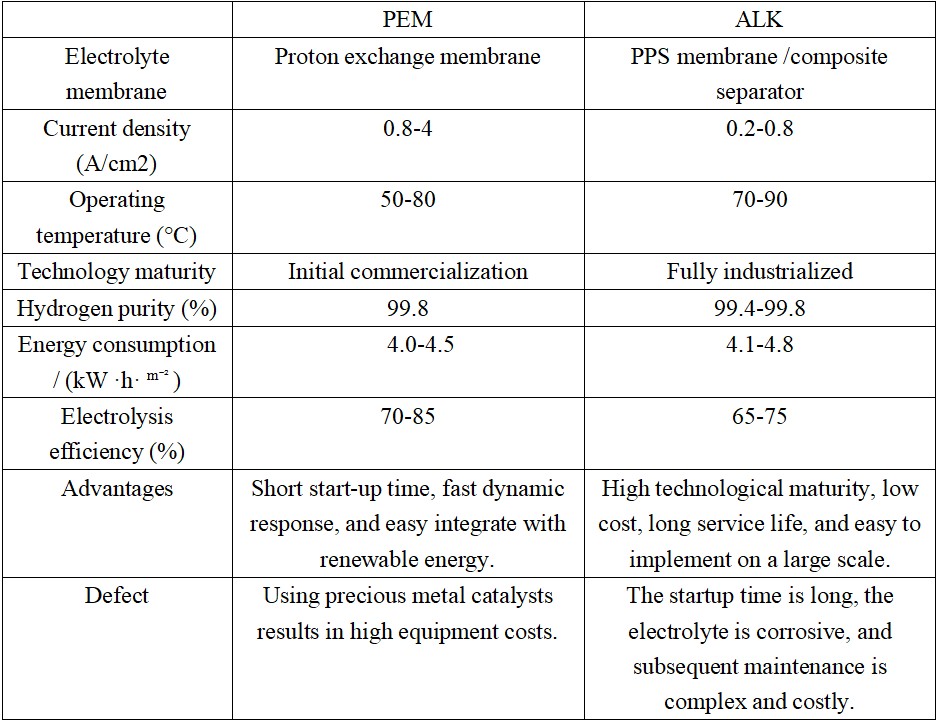
يُظهر جدول مقارنة التقنيات أن التحليل الكهربائي للماء باستخدام غشاء تبادل البروتونات (PEM) لإنتاج الهيدروجين يتميز بسرعة استجابة ديناميكية من المستوى الثاني وقدرة واسعة على ضبط الحمل، مما يجعله مناسبًا لخصائص إمداد الطاقة المتقطع لطاقة الرياح والطاقة الشمسية. مع ذلك، فإن اعتماده على محفزات من المعادن النفيسة مثل الإيريديوم والبلاتين، ومواد الألواح ثنائية القطب عالية الأداء مثل سبائك التيتانيوم، يؤدي إلى ارتفاع تكاليف تصنيع المعدات، مما يحد من انتشاره على نطاق واسع. في المقابل، يتميز التحليل الكهربائي للماء القلوي لإنتاج الهيدروجين بدرجة عالية من التصنيع، وقد خضع لاختبارات سوقية طويلة الأمد. لا يتطلب هذا النوع من التحليل محفزات من المعادن النفيسة، مما يؤدي إلى انخفاض التكاليف الإجمالية للمعدات. علاوة على ذلك، فإن عمره التشغيلي الطويل يُسهّل الوصول إلى تطبيقات واسعة النطاق بقدرة جيجاوات، مما يجعله التقنية السائدة حاليًا في إنتاج الهيدروجين.
تنعكس تقنيات إنتاج الهيدروجين PEM و ALK أيضًا في تصميم واختيار المواد لمكوناتها:
3.1 لوحة ثنائية القطب:
تُصنع أقطاب خلايا التحليل الكهربائي PEM من مواد عالية الأداء مثل صفائح التيتانيوم المطلية مسبقًا. ويُطلى سطح القطب بطبقة من البلاتين (Pt) لمنع الأكسدة. أما صفائح خلايا التحليل الكهربائي القلوية ثنائية القطب، فتُصنع من الفولاذ الكربوني أو النيكل النقي، وتُلحم بإطار القطب، ثم تُطلى بالنيكل. ويؤدي كلا النوعين من الصفائح ثنائية القطب وظائف متعددة، تشمل التوصيلية والدعم ونقل الوسط.
3.2 المكونات الأساسية:
تُجهّز خلايا التحليل الكهربائي ذات غشاء تبادل البروتونات (PEM) بطبقة إضافية لنشر الغاز (GDL)، حيث تُستخدم مواد كربونية (مثل ورق الكربون وقماش الكربون) للكاثود، ومواد تيتانيومية (مثل شبكة التيتانيوم ورغوة التيتانيوم المسامية) للأنود، مما يُتيح التحكم الدقيق في توازن انتقال الكتلة بين الغاز والسائل، وتحسين بيئة التفاعل. وتعتمد وحدة التفاعل الأساسية فيها - وهي مجموعة غشاء القطب (MEA) - على بنية غشاء مطلي بمحفز (CCM)، يتم تصنيعها من خلال عمليات الرش أو الطلاء المتواصل. وتؤثر دقة عملية تصنيع هذه المجموعة بشكل مباشر على كفاءة خلية التحليل الكهربائي. في المقابل، لا تتطلب خلايا التحليل الكهربائي القلوية طبقة لنشر الغاز؛ إذ يركز جوهر عملها على التصميم المتوافق بين الغشاء والقطب.
3.3 المحفزات ومواد الأغشية:
يستخدم محلل البروتونات ذو غشاء تبادل البروتونات (PEM) الإيريديوم (Ir) وأكاسيده (مثل IrO₂) كقطب موجب، ومحفز البلاتين-الكربون (Pt/C) كمحفز أساسي للقطب السالب. يتكون غشاء تبادل البروتونات بشكل رئيسي من غشاء حمض البيرفلوروسلفونيك (مثل نافيون) لضمان توصيل أيونات الهيدروجين بكفاءة. يوفر محلل البروتونات القلوي مرونة أكبر في اختيار المحفز، مما يسمح باستخدام المعادن النبيلة (البلاتين، والبلاديوم، والذهب، والفضة، إلخ)، والمعادن الانتقالية، أو المواد الكربونية (الحديد، والكوبالت، والنيكل، إلخ). يستخدم الغشاء بشكل أساسي أغشية PPS أو أغشية مركبة لضمان توصيل أيونات الهيدروكسيد بكفاءة وفصل الغاز عن السائل.
تتمتع أجهزة التحليل الكهربائي PEM، باستجابتها السريعة وتنظيفها الفعال، بمزايا لا يمكن الاستغناء عنها في مشاريع الهيدروجين الأخضر الموزعة وسيناريوهات استهلاك الطاقة المتجددة، وهي الاتجاه الأساسي للتحديثات التكنولوجية المستقبلية؛ في حين أن أجهزة التحليل الكهربائي القلوية، بخصائصها الناضجة والمستقرة والتي يمكن التحكم في تكلفتها، ستستمر في الهيمنة على إنتاج الهيدروجين الصناعي على نطاق واسع وسيناريوهات إمدادات الهيدروجين المستقرة على المدى الطويل.
لا توجد أفضلية أو قصور جوهري بين المناهج التقنية؛ فالمعيار الأساسي هو القدرة على التكيف مع الظروف المحيطة. أي منهج تقني تراه الأنسب من حيث الإمكانات المستقبلية الواعدة؟
1- من نحن؟
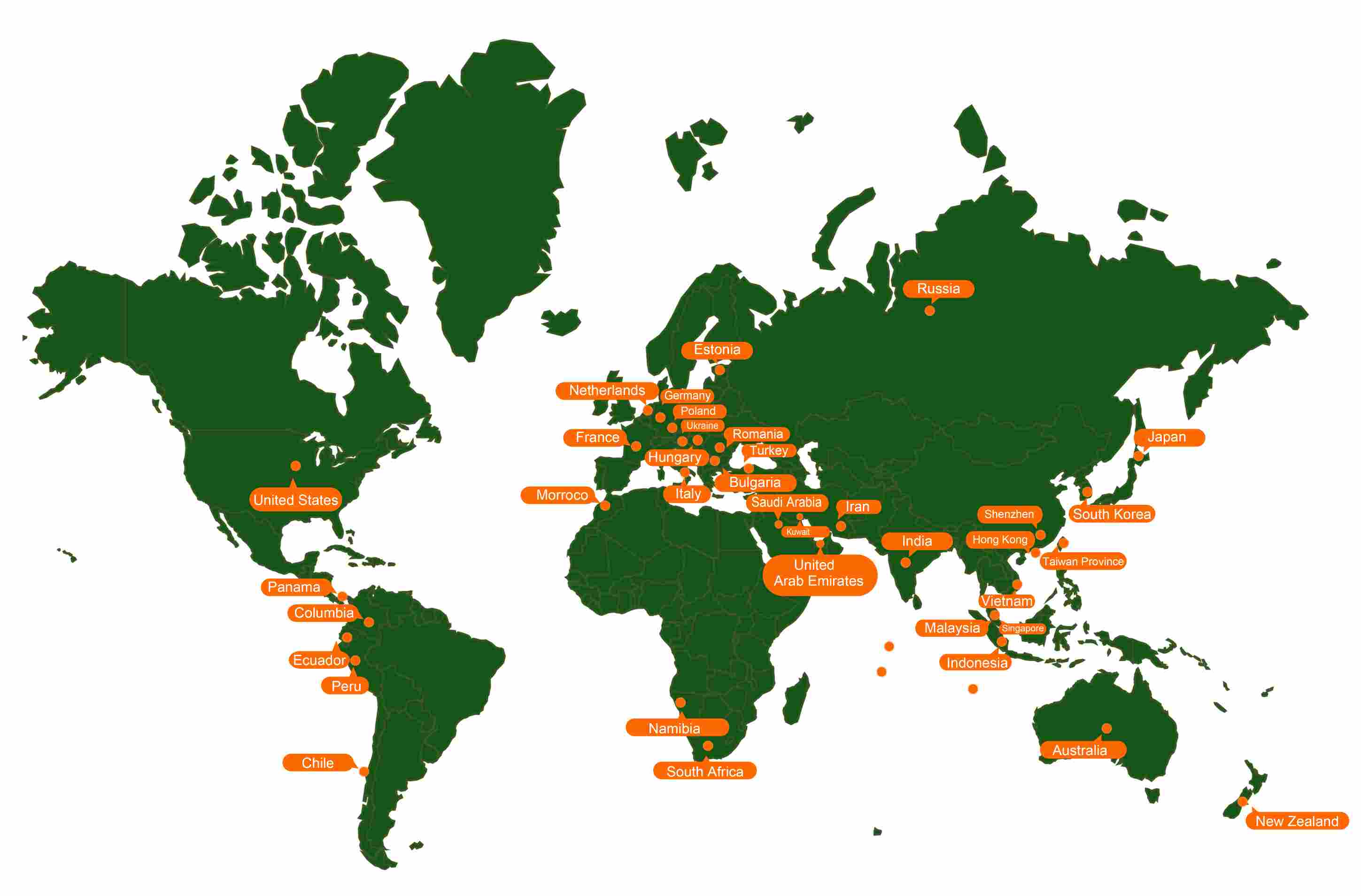
تتخذ شركة روبري من مقاطعة آنهوي في الصين مقراً لها، وقد بدأت أعمالها في عام 2011، وتبيع منتجاتها إلى جنوب شرق آسيا وأمريكا الشمالية وأوروبا الشرقية وجنوب آسيا.
2- ما هي خدمات سلسلة الصناعة الكاملة التي تقدمونها لإنتاج الهيدروجين عن طريق التحليل الكهربائي للماء القلوي؟
تقدم شركة روبري خدمات سلسلة الصناعة الكاملة بما في ذلك أنظمة إنتاج الهيدروجين بالتحليل الكهربائي للماء القلوي، وأجهزة التحليل الكهربائي، ومعدات فصل وتنقية الغاز والسائل، بالإضافة إلى خطوط إنتاج أجهزة التحليل الكهربائي، والتركيب، والاستبدال، والإرشاد الفني.
3- ما هي خدمات سلسلة الصناعة الكاملة التي تقدمونها لإنتاج الهيدروجين عن طريق التحليل الكهربائي للماء باستخدام غشاء تبادل البروتونات (PEM)؟
توفر شركة روبري أجزاء BOP متنوعة وأنظمة كاملة لعملية إنتاج الهيدروجين PEM بأكملها.
4- لماذا يجب عليك الشراء منا وليس من موردين آخرين؟
تمتلك شركة روبري فريقًا متخصصًا وذو خبرة في البحث والتطوير التقني. كما تتمتع بقدرات عالية في مجال أنظمة التحكم، والبحث والتطوير، ومراقبة الجودة. وتتميز بميزة تنافسية في الأسعار بفضل قدراتها على تكامل سلسلة التوريد.



 IPv6 الشبكة المدعومة