العربية
 English
 français
 Deutsch
 italiano
 русский
 español
 português
 Nederlands
 한국의
한국의 Romania
 Bulgaria
 Melayu

مقدمة: لا يكمن سر إنتاج الكلور القلوي الحديث في مجرد "كهربة المحلول الملحي"، بل في الجمع المُحكم بين الأغشية الانتقائية للأيونات، وتفاعلات الأقطاب الكهربائية، والمحلول الملحي عالي النقاء، مما يُتيح إنتاج الكلور والهيدروجين والصودا الكاوية بكفاءة عالية ضمن نظام التحليل الكهربائي. إن فهم آلية عمل جهاز التحليل الكهربائي يُساعد المشترين على تقييم مدى سلامة النظام المُقترح، كما يُساعد فرق التشغيل على تحديد ارتفاع استهلاك الطاقة، وانخفاض نقاء الصودا الكاوية، أو قصر عمر الأغشية بسرعة أكبر.
يدخل محلول ملحي مشبع ومنقى إلى حجرة المصعد. تحت تأثير التيار المستمر، تفقد أيونات الكلوريد إلكترونات عند المصعد لتكوين غاز الكلور. في الوقت نفسه، تمر أيونات الصوديوم الموجودة في المحلول الملحي عبر غشاء تبادل كاتيونات انتقائي إلى حجرة المهبط. يُغذى جانب المهبط عادةً بالماء منزوع الأيونات؛ وبعد اكتسابه إلكترونات عند المهبط، يُكوّن أيونات الهيدروجين والهيدروكسيد. ثم تتحد أيونات الصوديوم مع أيونات الهيدروكسيد لتكوين محلول هيدروكسيد الصوديوم. باختصار، يُنتج الكلور عند المصعد، بينما يُنتج الهيدروجين والصودا الكاوية عند المهبط. غشاء التبادل الأيوني للكلور والقلويات يُعد الجزء الأوسط مسؤولاً عن "السماح فقط للأيونات المناسبة بالمرور". ويمنع هذا النقل الانتقائي الكلور من ملامسة الصودا الكاوية مباشرة في عمليات الخلايا الغشائية الحديثة، مما يقلل من التفاعلات الجانبية ويحسن نقاء المنتج.
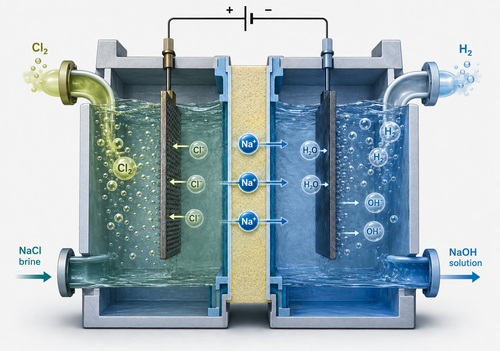
صُمم غشاء التبادل الأيوني عالي الأداء للكلور والقلويات لنقل الكاتيونات بشكل انتقائي: فهو يسمح لأيونات الصوديوم (Na+) بالانتقال من جانب المصعد إلى جانب المهبط، بينما يمنع الهجرة العكسية غير الضرورية لأيونات الكلوريد (Cl−) والهيدروكسيد (OH−) وجزيئات الماء. عند انخفاض انتقائية الغشاء، قد تنخفض كفاءة التيار، ويرتفع محتوى الملح في الصودا الكاوية، ويزداد استهلاك الطاقة لكل وحدة منتج. في المصانع، تتأثر حالة الغشاء أيضًا بالشوائب الموجودة في المحلول الملحي، مثل أيونات الكالسيوم (Ca2+) والمغنيسيوم (Mg2+) والحديد (Fe). يمكن أن تسبب هذه الشوائب التلوث أو الترسيب الموضعي أو زيادة المقاومة الكهربائية. لذلك، لا تُعد تنقية المحلول الملحي خطوة ثانوية، بل هي أساس التشغيل المستقر لخلايا الغشاء. يجب التحكم في صلابة المحلول الملحي والمواد الصلبة العالقة والمعادن النزرة لضمان استقرار المحلول الملحي الداخل إلى المحلل الكهربائي مع مرور الوقت، مما يطيل عمر الأغشية والأقطاب الكهربائية.
لا يصبح المحلل الكهربائي أكثر إنتاجية أو اقتصادية بمجرد زيادة التيار. فإذا كانت كثافة التيار عالية جدًا بينما لا يستطيع معدل التدفق أو درجة الحرارة أو حالة الغشاء مواكبة ذلك، فقد يرتفع جهد الخلية وقد يحدث تسخين موضعي. كما يجب التحكم في مستويات السائل والضغط بين حجرتي الأنود والكاثود؛ وإلا فقد يزداد النفاذ عبر الغشاء والتلوث المتبادل للمنتج. وعادةً ما يتطلب الصودا الكاوية الخارجة من حجرة الكاثود مزيدًا من التركيز لتلبية متطلبات التركيز في المراحل اللاحقة. للعملاء الذين يشترون منتجات عملية إنتاج الكلور القلويينبغي أن يتجاوز تقييم النظام مجرد القدرة الاسمية، وأن يشمل أيضاً مراعاة استهلاك الطاقة المحدد، وقدرة المعالجة المسبقة للمحلول الملحي، وتكوين مساحة الغشاء، وطريقة الدوران، وأجهزة التعشيق، وبيانات التشغيل المستمر على المدى الطويل.
يعمل المصعد في بيئة عالية الكلور لفترات طويلة، بينما يواجه جانب المهبط ظروفًا قلوية للغاية تُنتج الهيدروجين. لذلك، يجب اختيار مواد المعدات والطلاءات والأختام وهياكل التثبيت بحيث تتمتع بمقاومة للتآكل واستقرار طويل الأمد. إذا ارتفع جهد الخلية بشكل غير طبيعي، أو زاد تباين الجهد بين الخلايا، أو ارتفع تركيز الكلوريد في المنتج، أو أصبح فرق الضغط غير طبيعي، أو تدهور فصل الغاز عن السائل، فيجب على الفريق تحديد السبب على الفور، سواء كان تلوث الغشاء، أو انخفاض نشاط القطب، أو مشاكل في جودة المحلول الملحي، أو انسداد الأختام وقنوات التدفق. صيانة معدات الكلور القلوي لا ينبغي أن يتوقف الأمر عند "استبدال الأجزاء". بل يجب أن يجمع بين بيانات جهد الخلية الواحدة، والتدفق، ودرجة الحرارة، والضغط التفاضلي، وبيانات تحليل المنتج للتشخيص المنهجي، بحيث يمكن تحديد الأعطال المتطورة قبل الإغلاق.
تُركز روبري، إحدى علامات شركة هيفي سينوباور تكنولوجيز المحدودة، على التوافق التام بين معالجة المحلول الملحي، والمحللات الكهربائية، وأغشية التبادل الأيوني، وتكوين الأقطاب الكهربائية، بالإضافة إلى معالجة الغازات في المراحل اللاحقة، ومعالجة الصودا الكاوية، ودعم الصيانة في حلول الكلور القلوي. يمكن للشركات التي تُنشئ أو تُوسع أو تُحدث محطات الكلور القلوي معرفة المزيد عن حلول روبري ذات الصلة على موقع hfsinopower.com. على وجه الخصوص، عندما تُظهر الأنظمة القديمة استهلاكًا عاليًا للطاقة، أو استبدالًا متكررًا للأغشية، أو قطع غيار غير متوافقة، أو دورات صيانة طويلة للغاية، فإنه من الأجدى اقتصاديًا عادةً البدء ببيانات العملية وحالة الخلية قبل اتخاذ قرار بشأن تحسين التشغيل، أو تجديد الأغشية والأقطاب الكهربائية، أو إجراء تحديث هيكلي، بدلاً من استبدال النظام بالكامل.
تشمل الأسباب الشائعة تلوث الغشاء أو تقادمه، وانخفاض فعالية طلاء الأقطاب الكهربائية، وعدم استقرار التحكم في شوائب المحلول الملحي، وتراكم الترسبات في قنوات التدفق، ودرجات حرارة التشغيل خارج النطاق التصميمي. قارن أولًا التغيرات في جهد كل خلية على حدة وفرق الضغط، ثم اجمع تحليل المحلول الملحي، ومحتوى الملح في الصودا الكاوية، ومظهر الغشاء لتحديد السبب. هذا يجنب استبدال الغشاء مع إغفال مشاكل جودة المياه في المنبع.
لا توجد فترة زمنية ثابتة مناسبة لكل محطة. يرتبط عمر الغشاء ارتباطًا مباشرًا بنقاء المحلول الملحي، وكثافة التيار، ودرجة الحرارة، والتحكم في فرق الضغط، وتواتر بدء التشغيل والإيقاف، وجودة التركيب. من الأفضل تحديد معايير عمر الغشاء بناءً على اتجاهات كفاءة التيار، وجهد الخلية، وجودة الصودا الكاوية، والتسرب عبر الغشاء، بدلاً من استبدال الأغشية بناءً على مدة التشغيل فقط.
الخطوة الأكثر شيوعًا التي يتم إغفالها هي مراجعة البيانات. إذا اقتصرت الصيانة على استبدال الأختام أو الأغشية أو الأقطاب الكهربائية دون تحليل جهد الخلية قبل العطل، ومعدل التدفق، ودرجة الحرارة، والضغط التفاضلي، ومؤشرات المنتج، فمن المرجح أن تتكرر المشكلة نفسها. يجب على الصيانة أيضًا التحقق من تنقية المحلول الملحي، وأنظمة الدوران، ومعايرة الأجهزة، ومنطق التعشيق.
تشمل العناصر الرئيسية قدرة المعالجة المسبقة للمحلول الملحي، وأنواع الأغشية والأقطاب الكهربائية وإمكانية استبدالها، وبنية الخلية، وكثافة التيار التصميمية، واستهلاك الطاقة النوعي المتوقع، ونطاق درجة حرارة التشغيل، ومنطق التحكم الآلي، ومدة توريد قطع الغيار، وقدرات الصيانة ما بعد البيع. بالنسبة للمشاريع الخارجية، ينبغي أيضًا التأكد مسبقًا من ظروف الطاقة المحلية، ومعايير المواد، ودعم النقل والتركيب لتقليل مخاطر التشغيل والتكيف.



 IPv6 الشبكة المدعومة